



If you’ve been experiencing hair loss, you may be exploring treatment options that could help improve hair thickness or slow further thinning. Platelet-rich plasma (PRP) hair restoration is a non-surgical option that uses your body’s own biological processes to support hair health and follicle function.
Below, we walk through what PRP treatment involves—from the procedure itself to recovery and realistic expectations around results.
What Is PRP Hair Restoration?
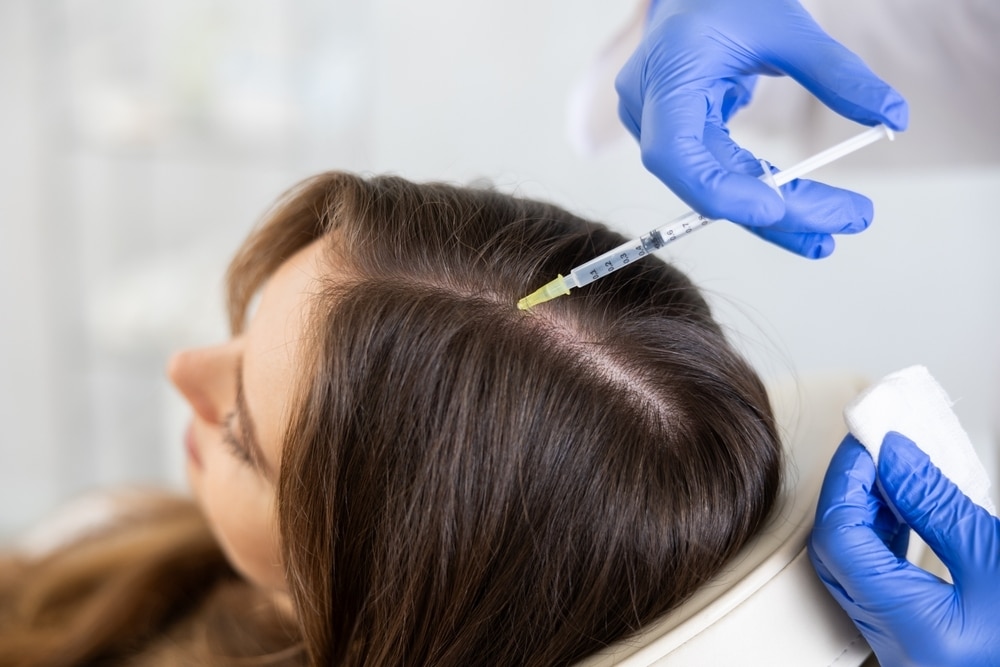
PRP hair restoration is a medical treatment that uses concentrated platelets from your own blood with the goal of supporting hair follicles in areas of thinning.
The procedure involves drawing a small amount of blood, processing it to concentrate the platelets, and then injecting this platelet-rich plasma into targeted areas of the scalp.
Platelets contain growth factors and proteins that play a role in healing and tissue repair throughout the body. When introduced into the scalp, these growth factors may help support existing hair follicles and improve the overall scalp environment, which can be beneficial for some patients experiencing hair thinning.
Because PRP is derived entirely from your own blood, it does not involve synthetic chemicals or foreign substances. This makes it an appealing option for patients interested in a more biologically based approach to hair restoration.
PRP has become increasingly popular among both men and women, though it is important to understand that results can vary. A consultation with your dermatologist can help determine whether PRP may be appropriate for your specific pattern and stage of hair loss.
How Does PRP Work for Hair Loss?
PRP works by delivering a high concentration of growth factors directly to the scalp in areas where hair follicles may be weakened or underperforming.
These growth factors are injected into the vascular layer of the scalp, where they may help improve blood flow and cellular signaling around hair follicles. In some patients, this can help strengthen existing hair and potentially encourage follicles that are still viable—but producing thinner hair—to function more effectively.
PRP is most commonly used for androgenetic alopecia (pattern hair loss) and tends to be considered more effective in early to moderate stages, when hair follicles are still present.
Dr. Paul Rose explains the role PRP may play at the cellular level:
“The growth factors in platelet-rich plasma work to rejuvenate the scalp environment by improving blood flow and delivering nutrients directly to hair follicles. This process can help strengthen existing hair and potentially stimulate dormant follicles to begin producing hair again. While results vary among patients, many people see improvements in hair density and thickness over time. The key is understanding that PRP works best as part of a comprehensive approach to hair health, often combined with other treatments for optimal results.”
It’s important to note that PRP does not work the same way for everyone. Age, genetics, overall health, and the cause of hair loss all influence how a patient may respond. During your consultation, your provider will discuss whether PRP is likely to be beneficial for you and what outcomes are reasonable to expect.
What Happens During a PRP Treatment Session?
A PRP treatment session begins with a standard blood draw, similar to routine lab work. Typically, 30–60 milliliters of blood is collected.
The blood is then processed in a centrifuge to separate and concentrate the platelets. This process takes about 10 minutes.
While the PRP is being prepared, your scalp is cleaned and marked for treatment.
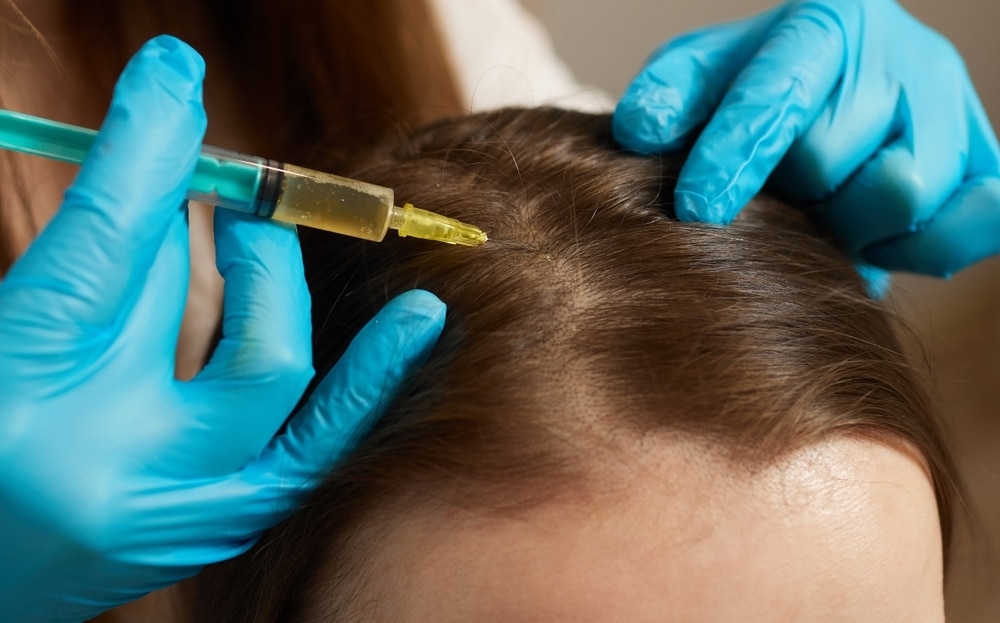
Once the PRP is ready, it is injected into specific areas of the scalp using fine needles. The injection pattern is customized based on areas of thinning or concern.
A PRP visit from beginning to end takes about 1.5 hours. Patients arrive one hour ahead of the actual procedure for preparation, and the actual injection time typically takes 10-20 minutes. Most patients are able to return to normal daily activities immediately afterward, though specific aftercare instructions may be provided.
What Does PRP Hair Restoration Feel Like?
The blood draw portion of PRP treatment is generally brief and similar to any standard blood test.
The scalp injections, however, can be uncomfortable and, for some patients, significantly painful. Sensitivity varies widely, but the scalp is a highly innervated area, and PRP injections are often described as sharp or intense.
To help manage discomfort, nitrous oxide (laughing gas) is offered. These approaches can make the treatment more tolerable for many patients, even though the scalp itself is not numbed.
After treatment, it’s common to experience scalp tenderness, soreness, or sensitivity for several hours—and occasionally up to a day or two. Mild redness or swelling may also occur and typically resolves without intervention.
Discussing pain tolerance and comfort concerns ahead of time is encouraged so your provider can help you plan appropriately.
When Will You See Results from PRP?
PRP works gradually and results are not guaranteed. The goal of treatment is to support hair follicles over time rather than produce immediate or dramatic changes.
Most patients who pursue PRP undergo a series of treatments—often spaced about one month apart—with maintenance sessions several times per year if initial results are seen.
Some patients may notice subtle changes in hair texture or shedding within the first 2–3 months. Others may not observe visible changes until later, and some may see minimal response.
When results do occur, they often appear gradually over 3–6 months, with continued changes up to 9–12 months. Improvements may include reduced shedding, stronger-feeling hair, or modest increases in density.
Because hair growth cycles are slow and highly individual, PRP hair restoration results vary significantly, and not all patients will respond. Your provider will help you evaluate progress and decide whether ongoing treatment makes sense for your goals.
If you have questions about your skin, schedule an appointment at Allura Skin & Laser Center today!